Zero tailpipe emissions
The vehicle stops producing local emissions while driving, lifting bins and compacting waste.
 Waste trucks
Traction, compaction, lifting and auxiliary systems fully electric. Reduce cost per kilometre, eliminate tailpipe emissions and extend fleet life.
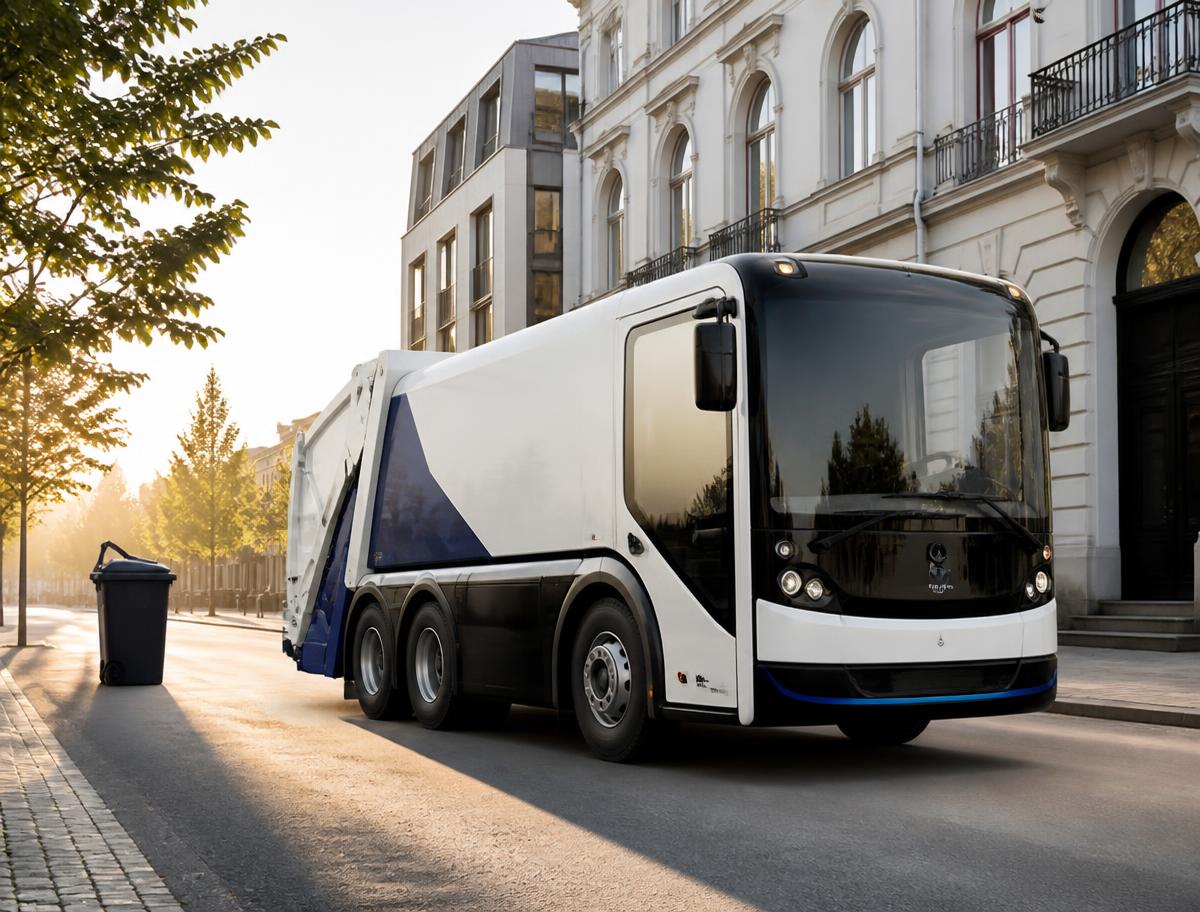
The vehicle stops producing local emissions while driving, lifting bins and compacting waste.
Electricity can deliver a lower cost per kilometre and per tonne collected than diesel, especially in intensive urban operations.
Frequent decelerations recover energy, improve efficiency and reduce brake wear.
Electric traction, lifting and compaction significantly reduce noise throughout the collection cycle.
The conversion removes the diesel engine, gearbox, exhaust system, filters and emissions treatment components.
Compaction and bin lifting run electrically, with no need to keep a diesel engine running.
We develop projects for every vehicle configuration and waste type, from urban collection to industrial.
Predictable routes, low speeds, hundreds of stops and daily return to base make these vehicles ideal for electrification.
Solutions adapted to more demanding operations with heavy load cycles and varied working conditions.
Adjust your real operating data and see the estimated annual savings and payback.
Retrofit reuses the existing chassis and body, cutting investment and industrial waste.
Straight answers about the electric retrofit of heavy vehicles and machines.
Yes. The body and the compactor are powered by the same battery, with no diesel engine running during collection.
Yes. Noise drops considerably, which allows collection in residential areas and noise restricted zones.
Typical urban rounds are covered with a single overnight charge. Sizing is based on your real routes and stops.
Overnight at the depot. We calculate the power required and the number of charging points for the whole fleet.
Yes. We follow European homologation and safety rules and deliver complete technical documentation.
We calculate your current cost per kilometre, per shift and per tonne collected and compare it with a 100% electric operation.